Author Archives: simon

120. Boon Mariage Parfait Kriek

Oh BrewDog. You mischievous bunch of pseudo-anarchist yet ruthlessly commercially driven scamps. Stop winning me over by actually being really nice guys who genuinely know and care a great deal about good beer.

And stop tempting me back to spend all of my wages at your fancy new Clapham Junction bar with its magnificently cornucopial supply of rare and delicious beers, such as Boon Mariage Parfait Kriek.

Actually don’t stop: this would have been a difficult one to get hold of otherwise.

This is a very special sour Gueuze from Lembeek in Belgium, brewed with no less than 400g of overripe, sour cherries per litre of beer, and then aged in oak vats for many months before being expertly blended and then refermented in bottle for a minimum of two years.
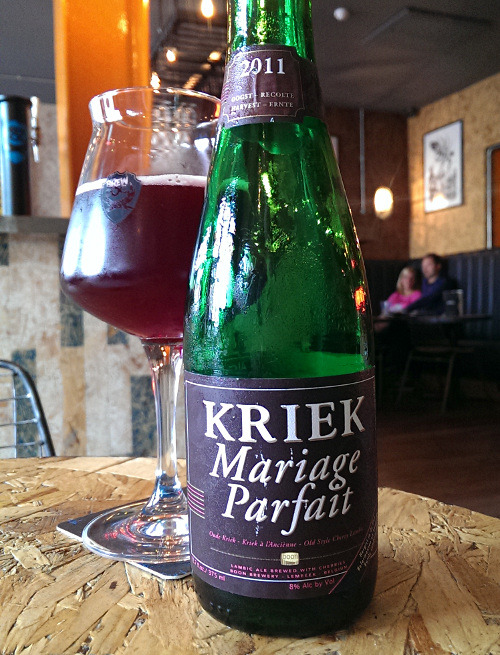
Boon Mariage Parfait Kriek at BrewDog Clapham Junction

Here we have a bottle of the 2011 vintage of Boon Mariage Parfait Kriek. It’s presented in a smart 375ml bottle with a sexy little champagne cork arrangement on top. Full credit must go to the barman for trusting the customer to open and pour this one themself.

It pours a rich, wine-dark red colour with a big frothy pink head which fades almost immediately. The aroma is light and delicate, with modest, fragrant hints of fruit and sourness.

That lightness and delicacy carries over to the flavour. Despite the respectable 8% ABV payload and the huge amounts of fruit, wood and time that have gone into this it’s such a subtle beer. You can taste the cherries for sure, but to call this a fruit beer would be to miss the point entirely.

There’s almost entirely no sweetness there at all, just a huge long dry finish that has you reaching for the next sip immediately. For all that dryness, it’s surprisingly refreshing, and as with the Cantillon Kriek, it’s sour, complex and just truly special.

It may well sound pretentious, but this is a real connoisseur’s beer, and in no way could my clumsy tasting notes and affectionate digs at BrewDog do it justice.

Apparently the Mariage Parfait should age beautifully over quite literally a matter of decades, and so now I’ve enjoyed this one, that bottle of the 2012 I found at BottleDog a couple of months ago can be put aside for a special occasion many years into the future.

Facts and Figures

Brewery: Brouwerij Boon nv, Lembeek, Belgium
Style: Lambic and Gueuze
Strength: 8.0% ABV
Found at: BrewDog Clapham Junction, Battersea Rise, London SW11
Serving: 375ml bottle

119. Meantime IPA

Between visits to Brighton last weekend and now Essex, we’re quite the jetsetter these days. You may remember Essex from such beery adventures as the rare and very tasty St. Sylvestre 3 Monts Bière de Garde.

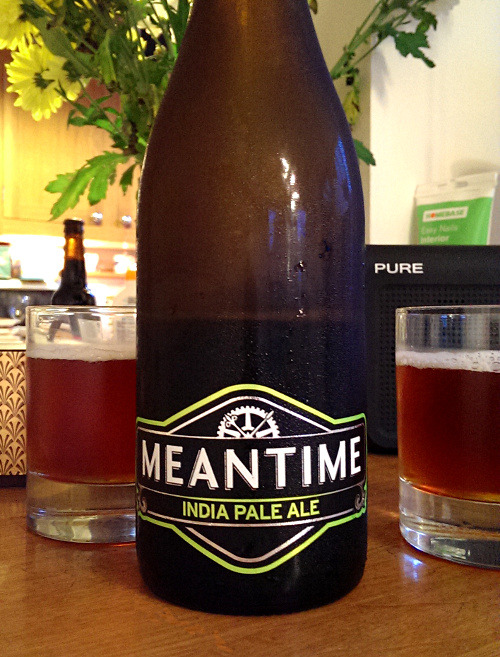
This time let’s pack a bottle of something from closer to home, and once again call upon the help of friends in working through this formidably-sized, champagne-corked bottle of one of South East London’s most famous beers, Meantime IPA.

Meantime IPA

Meantime IPA pours a deep, rich amber colour with a modest dose of white froth. The aroma is initially a somewhat unpromising combination of root vegetables and wallpaper paste, but as it warms and breathes a little things become more fragrant.

This is an exceptionally flavoursome beer, with prominent zesty lime notes and big piney, oily resins from the hops. Indeed there’s a huge amount of bitterness in there, but it’s successfully balanced out by the malting.

I’d say the Meantime IPA seems to strike a really nice balance between the English and American styles of IPA, with the warm, sweet malts of the former combined with the big citrus hops and higher ABV payload of the latter.

Indeed, at 7.4% this is a big, strong beer, but there’s no harsh alcohol burn. Instead there’s just a huge mouthful of chewy flavour and a long, long finish.

Meantime IPA is actually a great beer, and I’m not sure why I don’t drink it more often. I guess the fact that it’s kind of rare to find on tap, or in a sensibly sized bottle, might partly explain it, but it’s definitely one I’ll pick up again.

I’m also slightly curious to find out how this one would age. Whilst the usual advice is to drink a hoppy IPA as soon after bottling as possible, something about the malts in there, and perhaps the champagne cork sat on the top, suggest this one could mature quite intriguingly.

Facts and Figures

Brewery: Meantime Brewing Company, Blackwall Lane, London SE10
Style: India Pale Ales
Strength: 7.4% ABV
Found at: Whole Foods, Glasshouse Street, London W1B
Serving: 750ml bottle

118. Ballards Wassail

As I mentioned when we met Burton Bridge Empire Pale Ale recently, there might be a little more travel involved in tracking down some of the next few beers. And so it happens that this month’s Official Threehundredbeers Day Out takes us to the south coast for a slightly beery tour of Brighton.

We’re on the hunt for Ballards Wassail, a beer I’ve never even seen in my life. Fortunately the wonders of social media alerted me to the fact that the well-regarded new restaurant Coggings & Co carry an impressive list of local beers, including this one. Apparently they do a fine burger too, so this shouldn’t be too much of a hardship.

In fact, I think this will be the first beer here to be found in an actual restaurant. Clearly, we’re going up in the world.

Ballards Wassail at Coggings & Co

It turns out Brighton is quite the beer city these days. Apart from Coggings & Co, I managed to visit the Craft Beer Co, Brighton Beer Dispensary and the terrific Evening Star (twice) all in one day.

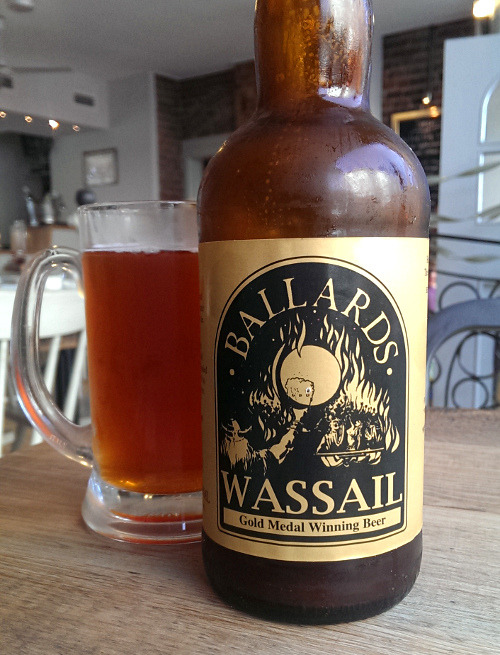
Anyway, to the matter at hand. Ballards Wassail is a deep, honeyed golden colour with very little in the way of froth. It was originally brewed as a christmas special, and it shows: this is a rich, warming beer full of festive fruit and spice flavours along with, at 6% ABV, a prominent but not unpleasant booziness to it.

In terms of style, I’d say this is about halfway between an Old Ale and a Barleywine, with the caramel sweetness of the latter very much present, but without the double figures alcohol payload. There’s a big, bready maltiness and even some herbal notes that remind me a little of the Fraoch Heather Ale.

This may not be a typical beer to choose in the height of summer to accompany a sturdy lunch, but we don’t stand on convention here at Threehundredbeers. I enjoyed it enough that I had a second while I was digesting.

A very nice beer then, combined with a cracking feed including some of the best chips I’ve ever had, and a warm welcome from the lovely staff. I was a very happy camper indeed. I look forward to trying more beers from this brewery, and I can certainly recommend Coggings & Co if you’re in the area.

Facts and Figures

Brewery: Ballards Brewery, Nyewood, Hampshire
Style: Old Ales, Barley Wines and Vintage Ales
Strength: 6.0% ABV
Found at: Coggings & Co, Dyke Rd, Brighton, East Sussex
Serving: 500ml bottle

117. North Coast Brewing Old Rasputin

BrewDog are one of those companies that can greatly divide opinion within the beer world, to say the least.

Their histrionic, Kevin-the-Teenager marketing schtick may not be to everyone’s tastes, but they do brew some fine beers. And now, via their bars and wonderful new shop, BottleDog in King’s Cross, [Edit: sadly now closed] they’re importing and making available some exceptional and rare beers from far-flung corners of the world. Which brings us neatly to this guy.

North Coast Brewing Old Rasputin

North Coast Brewing Old Rasputin is a fairly intimidating 9% ABV Imperial Stout, and hails from Fort Bragg, California. You’ll very occasionally find it in bottles, but will almost certainly never have seen it on tap in the UK. Unless, that is, you made it along to the newest BrewDog bar in Clapham Junction within the first few days after it opened.

Which, needless to say, Threehundredbeers did.

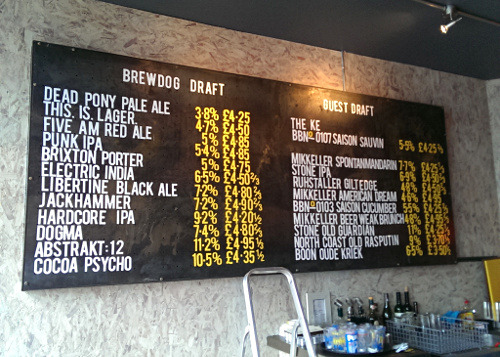
The beer board at BrewDog Clapham Junction

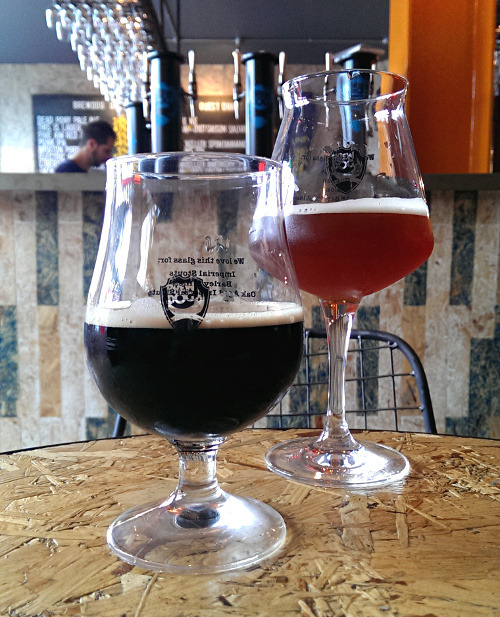
It’s a stout alright, and a mighty one at that. Old Rasputin is utterly black, coating the inside of BrewDog’s well-chosen glassware thickly with its tan froth and boozy alcohol “legs” as you swirl it around.

Speaking of which, the 1/3 pint measures are a nice touch, since this is quite a strong beer, and there are many other strong beers to be sampled here too. For the curious, that other third in the background is the Stone Brewing Old Guardian, a gigantic Barleywine that’s similarly rare to find on tap, if at all.

The aroma is surprisingly fruity, though fruit as in dates, figs, that sort of thing. The body perhaps isn’t the fullest I’ve ever come across in an Imperial Stout, though it’s still pretty robust.

First impressions are dominated by a huge bitterness, so much so that in my scribbled notes I wrote the word “bitter” three times, just in case I somehow forgot. There’s a big, warming alcohol hit up front too.

All the requisite Imperial Stout boxes are ticked: there are licorice, dark chocolate, leather and coffee flavours in spades. That bitterness won’t lie down though, not that you’d want it to.

This is a great beer, and it’s a real treat to find it on tap. I’d have had another, but that Old Guardian won’t drink itself. Either way, a browse through the BrewDog beer menu suggests this won’t be our last visit. Any excuse to return to a very pleasant bar that’s a wonderful addition to the South London beer circuit.

Facts and Figures

Brewery: North Coast Brewing, Fort Bragg, CA
Style: Porters and Stouts
Strength: 9.0% ABV
Found at: BrewDog Clapham Junction, Battersea Rise, London SW11
Serving: Keg, 1/3 pint

116. Brakspear Bitter

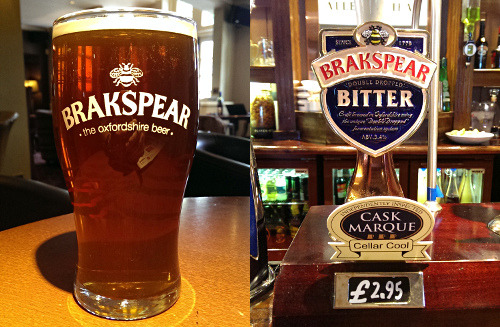
A trip to the West Dulwich mail sorting office to collect a package is always a good excuse to stop by The Alleyn’s Head, a pleasant enough local pub with a traditional but regularly changing guest cask lineup.

Since the sorting office is only open in the morning, we’ve reached the pub at a scandalously early hour, so perhaps something on the sessionable side is called for. Fortunately, there on the pumps is another of the many English Bitters we need. At an improbably reasonable £2.95 a pint (£2.49 all day Mondays) it won’t break the bank either.

Brakspear Bitter at the Alleyn's Head

Brakspear Bitter hails from somewhere in Oxfordshire, and comes to us courtesy of the same folks who brew that rather nice Brakspear Triple we enjoyed back in this blog’s infancy (last year).

It’s a fairly standard colour for a Bitter, in other words brown, if a little darker than some examples of the style. There’s a smallish cream coloured head that clings to the glass in an appealing fashion.

Well, it’s certainly bitter. There’s an unmissable citrus tang all the way from front to back. There are some juicy underlying malts and a tiny hint of butterscotch sweetness, but it’s that sharp bitterness that gets the attention.

In fact it’s hard to taste much else unless you concentrate quite hard. It’s not unpleasant though, and in fact is quite moreish. There’s no doubt that the Brakspear Bitter is in impeccable nick today, so I had a second pint. At that reasonable a price, it would seem rude not to.

Facts and Figures

Brewery: Brakspear Brewing Co., Witney, Oxfordshire, England
Style: Bitters
Strength: 3.4% ABV
Found at: The Alleyn’s Head, Park Hall Road, London SE21
Serving: Cask, pint

115. Burton Bridge Empire Pale Ale

It’s becoming apparent that if I’m to make a great deal more progress through the lengthy todo list, I’m going to have to spend a little more time looking beyond the perimeter of London.

Burton Bridge Empire Pale Ale is a case in point: it’s brewed in the heartland of British brewing, Burton-on-Trent, but the vast majority of it is exported to the States. One of the few places you will find it in this country is at the brewery tap, the Burton Bridge Inn.

As it happens, a day trip to St. George’s Park with The Official Threehundredbeers Sister meant that a visit to the Bridge Inn on the way home was eminently achievable, nay inevitable.

And why not. It’s a very pleasant, traditional two roomed pub of the sort that you’d barely leave if you lived nearby. There can’t be many places where one could get a stronger sense of being back where it all began, beer wise.

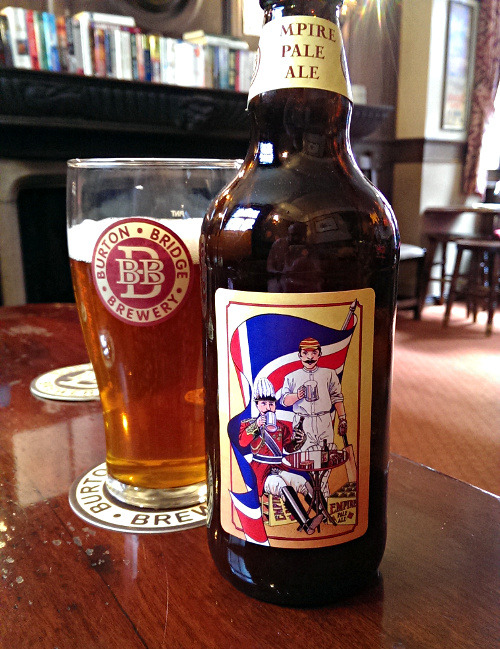
Burton Bridge Empire Pale Ale at the Burton Bridge Inn

Burton Bridge Empire Pale Ale is only available in bottle-conditioned form, and I’m immediately impressed that at the Bridge Inn, the bottles are kept in the cellar to be served at the perfect temperature. Fortunately the barman is a youthful chap, and more than happy to descend the stairs to fetch us one.

It’s lovely looking stuff, a honeyed copper colour with a thick tan head that lasts. The aroma is of huge bitter hops—it’s an IPA, that’s for sure—and an unexpected but unmistakable waft of sour notes that can only come from Brettanomyces yeast, of the sort that turns Orval slowly yet deliciously sour as it ages in the bottle.

We’d better get stuck in. Blimey, it’s strong and drinks every inch of its hefty 7.5% ABV payload. It immediately gets to work, flushing your face with warmth, and making you think you should probably take it slowly rather than get giddy and embarrass The Official Threehundredbeers Sister.

Once you get past the initial boozy hit, it’s lovely, mouthwatering stuff. The hop bitterness is huge and uncompromising, and the beer is all the better for it. It’s complemented by peppery spice and sultana fruit from the malts.

This is an IPA very much in the traditional English style, and I suspect this is as close as you can get to the proper old IPAs that were brewed in Burton 150 or so years ago, and exported to the Empire. Hence the name, I suppose.

That said, the sour Brett notes are intriguing, and not typical of IPAs that I’ve experienced. Thinking about it though, the chances of a beer brewed back then, and then transported in wooden barrels in the hull of a ship for several months not becoming inoculated with a wild yeast strain seem fairly remote.

Either way, it works. The combination of bitter and sour mean you’re more than likely to be sending the barman downstairs for another, as I did, and perhaps even taking one or two more home with you.

This is very much to my tastes, and it’s a beer I’d drink quite regularly in London if only it were easier to find. I’d also be fascinated to know how it responds to the long journey over to the States. For the time being, though, it looks like I’ll have to find another excuse for a trip back to the Bridge Inn.

Facts and Figures

Brewery: Burton Bridge Brewery, Burton on Trent, Staffordshire
Style: India Pale Ales
Strength: 7.5% ABV
Found at: The Burton Bridge Inn, Bridge Street, Burton on Trent
Serving: 500ml bottle

114. Triple fff Alton’s Pride

You simply have to love The Grape & Grain. I’ve said it before, but the contribution the pub has made to this blog, not to mention the South London beer scene, has been absolutely priceless.

This is no less than the tenth beer that the Grape & Grain have been able to furnish us with. Look, I’ve even given the relevant posts their own super special Grape and Grain tag now.

Shall we swing by once again on the off chance there may be something of interest among their 12 hand pumps? I don’t think there’s any doubt that we shall.

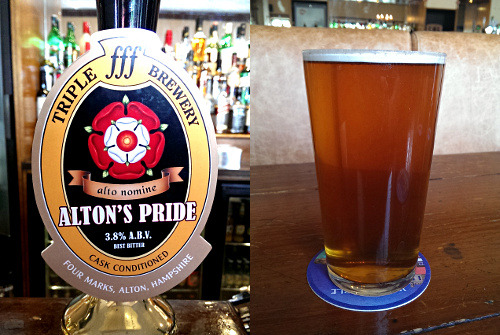
Triple fff Alton's Pride at the  Grape and Grain

I know very little about Triple fff, other than they’re a fairly small brewery tucked away somewhere remote in rural Hampshire. Alton’s Pride is yet another past winner of CAMRA’s coveted Champion Beer of Britain award, along with such beers as Mordue Workie Ticket and the wonderful Kelham Island Pale Rider. Perhaps I should create a tag for past winners too, as there are more to come.

Alton’s Pride is another fairly typical English bitter. I’ve been known to accuse examples of the style of being a bit boring and even crushingly unexciting, but this one is in a different league entirely.

It pours a very appealing deep bronze colour with a big, foamy tan head that fades quite quickly. Unlike some bitters, this one actually tastes of something.

Indeed, it’s big and fruity, with both citrus and dried fruits up front and vying for your attention. There’s a dense underlying Lyle’s Golden Syrup sort of sweetness from the Maris Otter and Cara Gold malts, and an immense, long bitter finish from the First Gold and Northdown hops. And when I say long, I mean I drank this beer several days ago and can still taste it. In a good way.

What a lovely pint. If I was looking to find fault, I might mention that the body is perhaps a little on the thin side, but for a beer weighing in at a modest 3.8% ABV, that isn’t really anything out of the ordinary.

What you get in return is a beer that’s hopelessly easy drinking, and an excellent session bitter that isn’t actually boring at all. Good stuff, and I’ll be keeping an eye open for more beers from this brewery.

Facts and Figures

Brewery: Triple fff Brewing Company, Alton, Hampshire
Style: Bitters
Strength: 3.8% ABV
Found at: The Grape & Grain, Anerley Hill, London SE19
Serving: Cask, pint

113. Castelain Ch’ti Blonde

This is the second Bière de Garde to be covered here, after that rather pleasant St. Sylvestre 3 Monts we enjoyed in Essex a couple of months ago.

As I’m sure I mentioned back then, Bières de Garde are basically synonymous with the Nord-Pas-de-Calais region of France. They were originally brewed on farms during winter and spring, and then kept—hence the name—somewhere cool, in order to keep the farm’s workers, and no doubt owners, well lubricated through the summer and autumn.

Castelain Ch’ti Blonde is a little more sessionable than the 3 Monts at a mere 6.4% ABV, and comes in a small enough bottle that I’ll probably manage it all myself this time. The name apparently is Picardy dialect for “c’est toi”, meaning “it suits you”. It certainly suits me to pull this one from the fridge and crack it open.

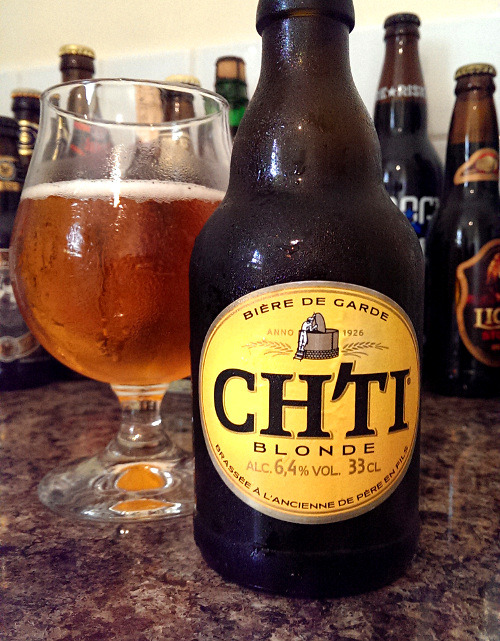
Castelain Ch'ti Blonde

Poured from its 330ml bottle, Ch’ti Blonde is a lovely, glistening copper colour with a big, foaming white head that seems to fade quickly.

I’ve noticed that happen with many bottled beers, and recently read that it may be to do with pouring them in the kitchen where the air is likely to contain microscopic oil particles from cooking. It’s an interesting theory, and one I’d be fascinated to hear people’s views on.

There isn’t a huge aroma beyond a malty Rich Tea biscuit sweetness and some general lagery notes. The initial taste is faintly sweet too, but it’s balanced out by a full malty body and a big, long dry finish. There’s a slight golden syrup note that’s a little reminiscent of a Belgian Ambrée such as Bush, or perhaps a lighter version of the famous Pauwel Kwak.

As with the 3 Monts, this isn’t a beer that shouts, but it’s hopelessly easy to drink, and this one went down quickly enough that I had a job on my hands just getting a respectable number of tasting notes written down.

Bières de Garde do seem to pair particularly well with food, and Ch’ti Blonde again is robust enough to stand up to strong spices, while being subtle enough not to upstage lighter flavours. I didn’t have this one with food, of course. I had it while sat at a laptop typing a blog post about how well it would go with food, but I think my point stands.

Good stuff, all in all, and particularly welcome straight from the fridge after a long, sweltering week at work in London.

Facts and Figures

Brewery: Brasserie Castelain, Benifontaine, France
Style: Bières de Garde
Strength: 6.4% ABV
Found at: Beers of Europe
Serving: 330ml bottle

112. Samuel Smith’s Organic Pale Ale

It’s Friday, it’s lunch time, and the office is eerily quiet, so let’s sneak out to the pub for a well-earned spot of light refreshment.

It’ll be a good opportunity to try the Glasshouse Stores, one of the countless Sam Smith’s pubs that lurk around the nicer end of Soho, luring in passers-by optimistic that they may be able to requisition a pint of their favourite brand of beer within.

They can’t, obviously, as it’s all Sam Smith’s beers in here. That’s fine with us, because we’ve a fourth and final one to track down. This is the Organic Pale Ale, formerly known as Old Brewery Pale Ale, but rebranded a couple of years ago when organic things seemingly became more fashionable than old things.

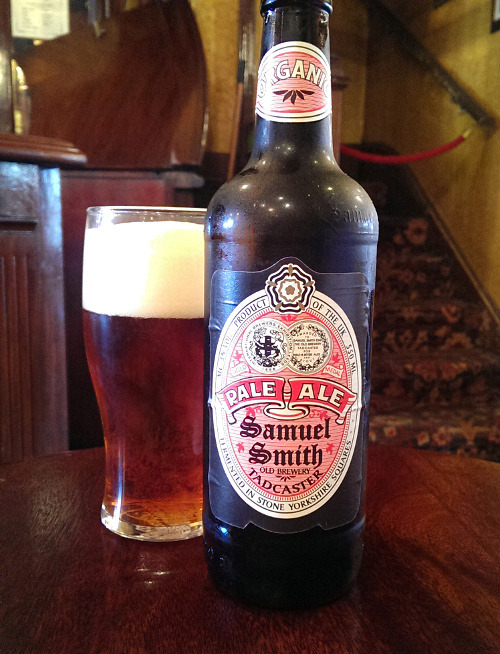
Samuel Smith's Organic Pale Ale at The Glasshouse Stores

The Glasshouse Stores itself is a very nice old thing, or at least looks it. It’s a bit of a cosy timewarp, with its etched mirrors, acres of timber panelling, and warren of tiny rooms that you know are there but can’t seem to find a route to. It successfully manages to pull off feeling like a decent local boozer despite its location, and for that it is to be commended.

Pouring the beer from its satisfyingly chunky, generously sized bottle, there’s a big waft of enticing dark fruits, and the Organic Pale Ale comes out a very nice deep chestnut colour, albeit with a slightly alarming pinkish tinge.

There’s a big cream-coloured head, and indeed a lot of fizz due to the carbon dioxide added to the bottle, which seems a surprising choice for such a traditional style of beer.

It’s tasty though, that’s for sure, and full of malty sweetness and dried fruit. So much so that I’m actually reminded of a Barleywine, which I didn’t expect. The spicy English hops provide a big, satisfying bitter finish that’s very moreish indeed.

There’s a lot of depth and complexity in there, yet served well chilled it’s refreshing too, and thoroughly welcome on what was the hottest day of the year so far.

I stuck at one and drifted back to the office, but this is a beer I’d happily drink again. I happen to know it’s a great accompaniment to your traditional sort of pub food—fish and chips, burgers, that sort of thing—but I’ll save that for a cooler day.

Facts and Figures

Brewery: Samuel Smith Old Brewery, Tadcaster, North Yorkshire, England
Style: Pale Ales
Strength: 5.0% ABV
Found at: The Glasshouse Stores, Brewer Street, London W1F
Serving: 550ml bottle

111. Berliner Kindl Weisse

It’s been quite some time since we ticked off a beer from the Wheat Beers section of The Book, and even longer since we tackled a sour beer. Thankfully, the magnificently cornucopial BottleDog have recently had Berliner Kindl Weisse, a sour German wheat beer, in stock.

Berliner Kindl Weisse

I learn from Official Threehundredbeers German Correspondent Carmen that in Germany this kind of beer would typically be enjoyed in the summer, and mixed with herbal or fruit flavoured syrups. It’s certainly summer here, but I wouldn’t know where to find woodruff flavour MIXcups in this country.

Maybe it’s better to simply find out what the beer tastes like first anyway.

I’m also informed that “Kindl” is a regional term meaning “child”. I dread to think what the well-meaning party poopers at the Portman Group would make of that, not to mention the charming little picture of a thirsty looking toddler on the label.

Berliner Kindl Weisse

Berliner Kindl Weisse seems an unusually golden straw colour for a wheat beer, but then I’m reminded of the Kernel’s Berliner Weisse version of their London Sour, which was much the same colour. There’s a healthy dose of white froth that disappears quickly.

To smell, it’s a pungently sour beer, and I certainly can’t imagine the aroma or indeed the taste appealing to children. It’s a relentlessly dry beer, which complements the face-puckering sourness well. The result is hugely refreshing.

It’s light and effervescent too, quite unlike the cloying, musty Belgian-style wheat beers such as Hoegaarden. No, this is in a different league. There are notes of vanilla ice cream, sherbet and citrus fruit, without being in any way sweet.

I like it a lot, and I’m not sure I’d want to flavour it with fruity syrups at all. Perhaps one day, purely for research purposes, but otherwise this is definitely a beer I’d buy again to keep in the fridge ready for a hot afternoon.

Facts and Figures

Brewery: Berliner-Kindl-Schultheiss-Brauerei GmbH, Berlin, Germany
Style: Wheat Beers
Strength: 3.0% ABV
Found at: BottleDog, Gray’s Inn Road, London WC1X
Serving: 330ml bottle