Author Archives: simon

137. Daleside Morocco Ale

It’s a bank holiday here in the UK, which means a rare scheduled day off work for Threehundredbeers. It’s on occasions such as this that thoughts inevitably turn to beer, in particular the growing queue of bottles in the spare room.

This was a present from The Official Threehundredbeers Sister, who you may remember from such day trips as Burton-on-Trent. For a non-beer drinker, she’s remarkably good at finding these things, and it helps that she’s strategically located near to Beer Central, a great little beer shop on the new Moor Market in Sheffield.

Daleside Morocco Ale hails from Harrogate in Yorkshire and it’s a beer that I’ve never seen down here in London, so I was very pleased to get my hands on it.

Daleside Morocco Ale

It’s described as a “strong dark spiced and mysterious ale brewed to the secret ancient recipe held at Levens Hall for over 300 years”. It is apparently ideal as a dinner beer, but that won’t stop Threehundredbeers cracking it open in the middle of the afternoon.

Daleside Morocco Ale pours a very deep dark ruby red colour and there’s a nice layer of tan foam sat on the top. There’s a rich malty aroma packed with dates, raisins and fruitcake notes.

The beer has a big, malty and slightly sticky body full of rich bonfire toffee and black treacle flavours. I can imagine this one being particularly well suited to the winter months, but the fact that the sun is actually out doesn’t hurt at all.

It’s claimed that the recipe dates from the time of Elizabeth I, and while my tastebuds aren’t sufficiently well-tuned to detect exactly which spices or other ingredients are in there, ginger and nutmeg spring to mind. The Book mentions that meat was once part of the recipe, in order to sustain the yeast while the beer was matured for 21 years.

The Morocco Ale is now meat-free, in case that puts you off, and aged for a great deal less time. Still, I like this one. The richness means I probably couldn’t manage more than one but I’m very pleased to have tried what is a unique and very interesting beer.

Facts and Figures

Brewery: Daleside, Harrogate, North Yorkshire, England
Style: Beers made with Fruit, Spices, Herbs and Seeds
Strength: 5.5% ABV
Found at: Beer Central, The Moor Market, Sheffield, South Yorkshire
Serving: 500ml bottle

138. Caracole Troublette

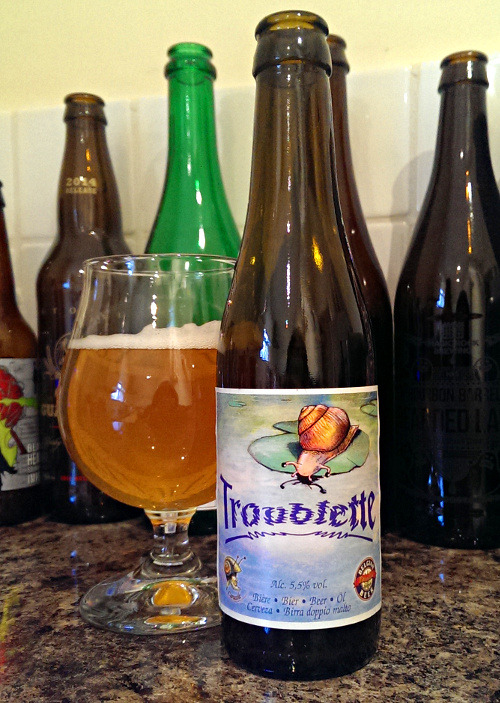
Here’s a beer that’s been sat around the house, and indeed somewhat neglected for a while since it arrived in a case from Beers of Europe a year or so ago.

Whilst I’m not typically a great fan of the Belgian-style Wheat Beers, I’ll keep an open mind. I have tried one Caracole beer, their Ambrée, at Poechenellekelder in Brussels, and it was very good indeed.

Let’s give this one a chance.

Caracole Troublette

There’s that slightly murky golden colour so typical of the style, though it’s a little less cloudy than some, despite a reasonably hard pour to make sure any yeast gets in there, which appears to be the done thing.

It smells distinctly Belgian: when it comes to beer, Belgium is all about the yeast, and as expected it’s prominent here.

To my surprise, I actually rather like this one. It’s light but not as watery as the Blanche de Namur. If anything, it’s a little more like a standard Belgian blonde than any wheat beer I can remember.

There’s an interesting citrus tang in there, and I wonder if Troublette contains a hint of orange peel, which is a common addition to this style of beer. There’s a subtle but pleasing peppery hop bitterness which is a rarity for a Belgian beer, but welcome all the same.

Served chilled, this would be a thoroughly refreshing summer beer. I can well imagine myself sipping one on the terrace outside Poechenellekelder while watching the tourists go by.

You know, that gives me an idea. Stay tuned…

Facts and Figures

Brewery: Brasserie Caracole, Falmignoul, Belgium
Style: Belgian-style Wheat Beers
Strength: 5.5% ABV
Found at: Beers of Europe
Serving: 330ml bottle

136. Beavertown Bloody ‘Ell

The keen-eyed reader will be a little surprised to see this beer pop up, since it isn’t actually in The Book. In fact this is our first substitution for a discontinued beer.

This one replaces Nethergate Augustinian Ale. Now, Nethergate do still brew a beer by that name, but it isn’t the beer featured in The Book, a 5.2% bottled beer spiced with coriander, which was typically only available in the US.

That leaves us needing to fill a gap in the slightly catch-all Beers made with Fruit, Spices, Herbs and Seeds category. I think this will fit the bill nicely.

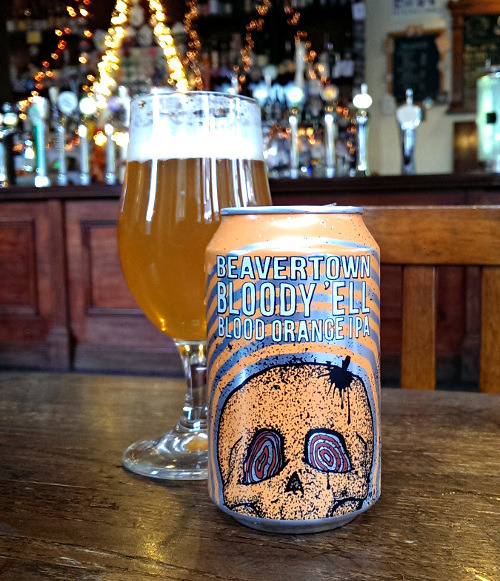
Beavertown Bloody 'Ell at Stormbird, Camberwell

Right off the bat, I’ll admit to being a huge fan of London’s Beavertown, so there was no hesitation in picking this one, especially when it appeared in the fridges at the ever-magnificent Stormbird. You may remember Stormbird from several previous posts.

Beavertown are one of the success stories of the flourishing modern London beer scene, and brew some terrifyingly good beers. Bloody ‘Ell is an occasional, special edition type beer brewed with the addition of a metric truckload of blood oranges.

A thumping great 7.2% American-style IPA, Bloody ‘Ell comes as fresh as can be in its tactile, garish little can, decorated with Beavertown’s distinctive signature Nick Dwyer artwork.

As a natural, dare I say “real” beer, Bloody ‘Ell is not artificially clarified, and so pours the now almost traditional “London Murky” golden colour so typical of IPAs from the new wave of London breweries. There’s a great big waft of citrus, as much from the giant American hops—Amarillo and Citra—as the blood orange.

The citrus obviously carries through to the flavour, though interestingly enough, I’m not convinced I would have identified the orange specifically without prompting.

That’s kind of a compliment: the huge juicy hops and the blood orange combine so effortlessly that nothing seems out of place, and the orange becomes more of a subtle addition rather than giving the impression you’re drinking a fruit beer.

Either way, it all works beautifully. Mouthwatering and hopelessly moreish, Bloody ‘Ell is an instant classic. It’s just a shame that the quantities produced are naturally constrained by a limited supply of the oranges themselves.

Good stuff. I’ll take two more cans home with me, thanks Stormbird.

Facts and Figures

Brewery: Beavertown, Tottenham Hale, London N17
Style: Beers made with Fruit, Spices, Herbs and Seeds
Strength: 7.2% ABV
Found at: Stormbird, Camberwell Church Street, London SE5
Serving: 330ml can

135. Wadworth 6X

Since we’re in Swindon for the day, and having successfully put ourself on the outside of a couple of pints of the rather tasty Arkell’s Kingsdown Ale, why not let’s track down another Wiltshire-brewed beer, the Wadworth 6X.

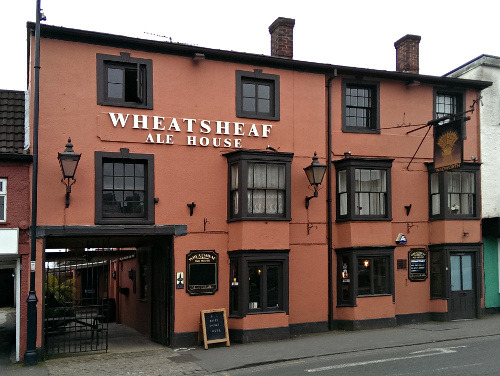
6X is brewed in Devizes, not too far down the road, and Wadworth themselves have a couple of pubs in Swindon, one of which is The Wheatsheaf. It’s a spacious, rambling place with more rooms than I was able to locate in a single visit. Appearances suggest it to be a former coaching inn, and it’s very much the sort of pub in which Threehundredbeers could happily while away a Saturday afternoon.

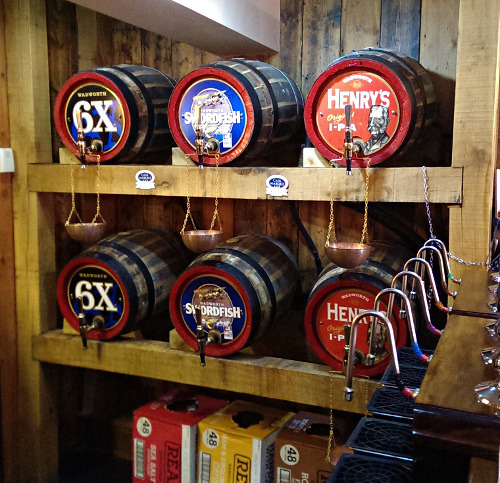
Of course, as a Wadworth pub, you can reliably expect to find a pint of 6X here, and in excellent condition too. Of particular interest is the fact that at The Wheatsheaf, the 6X is served on gravity from oak barrels rather than the more commonplace modern metal alternative.

image

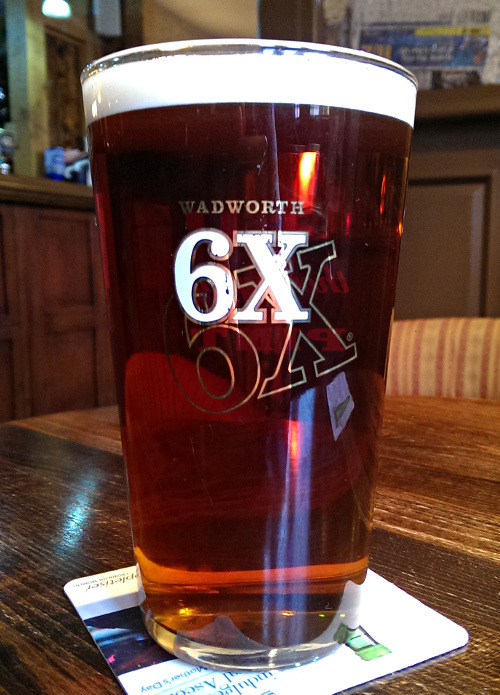
I think it’s fair to describe Wadworth 6X as an archetypal Best Bitter, and so it pours the expected warm copper colour. Served from gravity it’s completely still, and yet manages to rustle up a generous off-white head. There are no surprises in terms of aroma, with the expected peppery yet subtle English hops dominating.

image

There are the oak casks right there. Well, perhaps not exactly. I’m told that the real oak casks are in the cellar and what you see behind the bar is a sort of elaborate charade, designed to sort of communicate the fact that there are oak barrels involved somewhere along the line, which seems fair enough.

I’m not sure I could taste oak, but then I believe the traditional barrels would typically be lined with pitch to prevent the wood and beer becoming intimately acquainted. Of course, I’m happy to be corrected if that isn’t the case here.

image

What you do taste is in many ways a typical Bitter. While that’s not a style that I’ve always been thoroughly excited by, there’s no doubt the 6X is a very good example of the style. It’s nutty, chewy and full of raisin and sultana fruits. The body is spot on: not in any way thin or watery like some lesser Bitters, but not so heavy that you couldn’t manage a few pints if push came to shove.

There’s a pleasing caramel sweetness underlying proceedings and a long lingering bitter finish. This is a good beer and it’s served to perfection at The Wheatsheaf. I’d call this a pretty successful day out.

Facts and Figures

Brewery: Wadworth & Co, Devizes, Wiltshire, England
Style: Best Bitters
Strength: 4.1% ABV
Found at: The Wheatsheaf, Newport Street, Swindon, Wiltshire
Serving: Cask, pint

134. Arkell’s Kingsdown Ale

It’s time to hit the road again, and you certainly can’t say I don’t treat you, because today we’re off on a day trip to Swindon.

Whilst not always considered to be the most glamorous of English towns, Swindon has been home to Arkell’s since the brewery was founded in 1843. That makes Arkell’s two years older than London’s oldest brewery, the venerable Fuller’s.

image

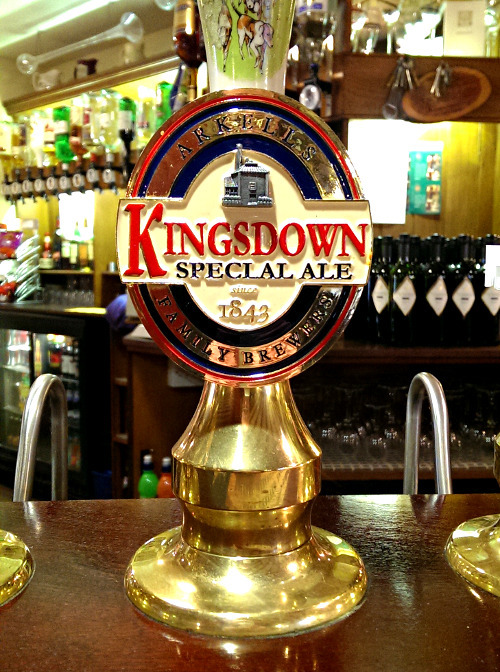
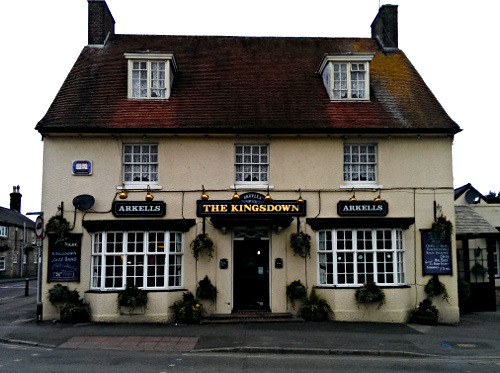
We’re on the hunt for Arkell’s Kingsdown Ale, an ESB-style brew, and where better to try it than the Arkell’s brewery tap, the pub after which the beer is named. And so an eye-wateringly cold day sees Threehundredbeers, armed with a rigorously-researched knowledge of Swindon’s bus system and the correct change for a DayRider, make its way to the The Kingsdown.

image

The Kingsdown is a lovely big old-fashioned pub. It was all but empty on the Saturday lunchtime that I visited, though I imagine it to be busier during the week when the adjacent brewery is at work. Of course, at the brewery tap, Kingsdown Ale—brewed a matter of meters away from the pub—is always available and in excellent condition.

image

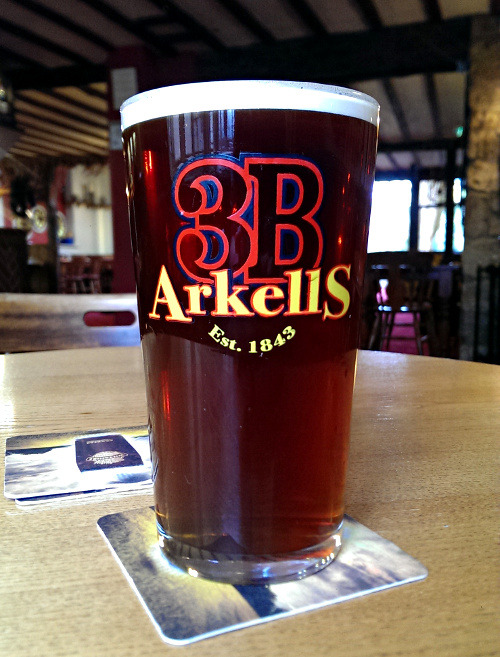
Served in an oh-so-nearly appropriately-branded glass, it’s a handsome beer, dark copper in colour and with a smooth tan head. It’s blooming drinkable stuff too. A little lighter than Fuller’s ESB, it’s still a weighty beer and full of raisin and sultana fruit. There’s that rich caramel sweetness so typical of the style, and big, moreish tangy notes at the end.

There’s an almost wine-like character to the Kingsdown Ale, which reminds me a little of the Fraoch Heather Ale. It all goes down easily enough that a second pint is inevitable. We’ve come all the way to Swindon, we might as well.

Good stuff, and definitely one to try if you happen to find yourself on the outskirts of Swindon, as I’m sure you regularly do. For now though, DayRider at the ready, we’ve another Wiltshire-brewed beer to track down.

Facts and Figures

Brewery: Arkell’s Brewery, Swindon, Wiltshire, England
Style: Extra Strong Beers and Bitters
Strength: 5% ABV
Found at: The Kingsdown, Upper Stratton, Swindon, Wiltshire
Serving: Cask, pint

133. Titanic Stout

There are many things you could name a brewery after, but the chaps at Stoke-on-Trent’s Titanic Brewery seem to have made a particularly bewildering choice.

Not that the name appears to have held them back. Titanic Stout can be found as the resident stout on the bar in quite a number of pubs, at least in my part of the world, making impressive inroads into the territory more often associated with the ubiquitous Guinness.

One such pub is the well-regarded The Gun. Hidden away down narrow streets on the Isle of Dogs, and sat directly on the banks of the Thames, The Gun has been very much gastrofied in recent years, yet remains a perfectly pleasant location to try a pint of beer number 133.

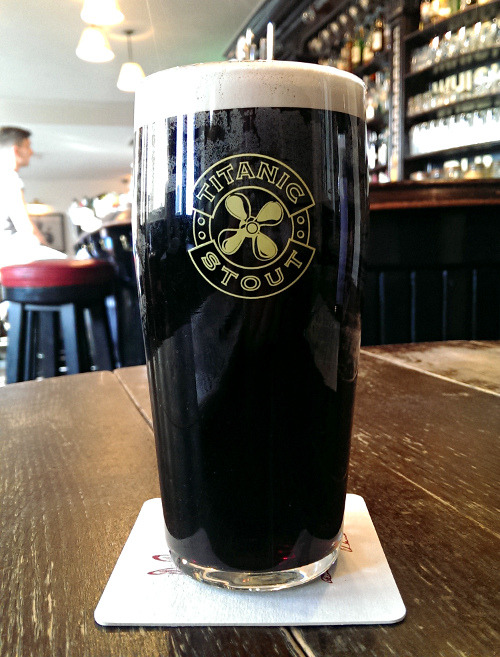
Titanic Stout at The Gun, Docklands

It’s a handsome pint too, and the branded glassware is a nice touch. Titanic Stout is a deep ruby red colour, rather than the jet black which is often associated with stouts. There’s a lovely smooth tan head, no doubt helped in part from being served from keg.

Once we’ve finished admiring it and trying to get a decent photo while the low spring afternoon sun does everything it can to sabotage our efforts, it’s time to crack on and give it a try.

Well, it tastes like a stout. It’s nice enough, and pleasingly full-bodied and smooth, but it doesn’t give you much to say about it beyond that. There isn’t a great deal of bitterness or any real punch to it, making Titanic Stout thoroughly accessible but perhaps also a little inoffensive.

That could well be by design, as a necessary factor of getting the beer onto the bar in so many pubs. It’s not a bad pint by any stretch of the imagination, and I’d happily drink it again. I probably will in fact, in case I’m missing something, but for the time being it left me wanting somewhat more from a stout.

Facts and Figures

Brewery: Titanic Brewery, Stoke-On-Trent, Staffordshire
Style: Porters and Stouts
Strength: 4.5% ABV
Found at: The Gun, Coldharbour, London E14
Serving: Keg, pint

132. Lion Stout

It’s not every day that one finds oneself drinking a Sri Lankan beer, so this could be interesting. In some ways I’m surprised to learn that any beer at all is brewed in Sri Lanka, let alone a thumping great stout.

It turns out that there are at least three breweries there, with Lion Brewery, formerly the Ceylon Brewing Company, tracing their history back to 1860.

This one came in an exciting case from Beers of Europe quite some time ago, and according to the label it is best consumed before, well, tomorrow. I’m not particularly worried since a 7.5% ABV stout should age quite happily, but it’s a good excuse to crack it open.

Lion Stout

On doing so there’s a big bitter chocolate and coffee aroma that’s instantly reminiscent of the Guinness Foreign Extra Stout. Apparently I liked that one, so no complaints there. Lion do actually brew Guinness under licence, so I wonder if that’s entirely a coincidence.

Lion Stout pours thick and black like a proper stout should. There’s a pleasingly thick coffee-coloured head that dissipates fairly quickly.

To taste, there’s an immediate, full-on and tangy berry-like sharpness. It’s full of fruity notes that oddly are not dissimilar to something like the sour cherry flavours in a Begian Kriek, such as the Cantillon Kriek.

It’s full of coffee and chocolate notes too, and a touch of sweetness not unlike a milk stout, though I’m sure there’s no lactose goes anywhere near it. A big hoppy bitterness suggests this one would develop in the bottle for a good while yet.

This is a decent little bottle of stout. It’s a proper winter beer though, so I’m not sure how well it goes down in Sri Lanka’s tropical climate. Still, they seem to like it. I rather like it too and I’ve glad I’ve had the chance to try something quite so exotic.

Facts and Figures

Brewery: Lion Brewery (Ceylon), Biyagama, Sri Lanka
Style: Porters and Stouts
Strength: 7.5% ABV
Found at: Beers of Europe
Serving: 330ml bottle

Colchester Winter Ale Festival 2015

It might lose me a couple of beer nerd credibility points to admit it, but until this weekend, I had never attended an actual beer festival. To be quite honest, I wasn’t entirely sure what that sort of thing really entails.

So when the texted invitation to the 8th Colchester Winter Ale & Cider Festival came through from Colchester-based Official Threehundredbeers Drinking Buddy Ben, everything else was cancelled, and Threehundredbeers steeled itself to endure all sorts of rail replacement buses and points failures to get there, all in the name of research and science.

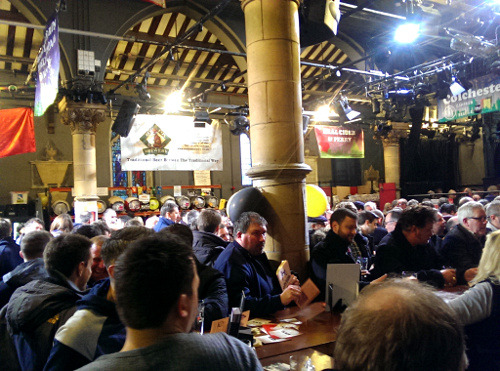
The festival was held at the Colchester Arts Centre, a repurposed church which sits in the heart of historic Colchester. It’s a big, flexible space that’s almost ideal for events such as this. The festival started some time during the week, building steadily up to the Saturday when we visited.

Colchester Winter Beer Festival, 2015

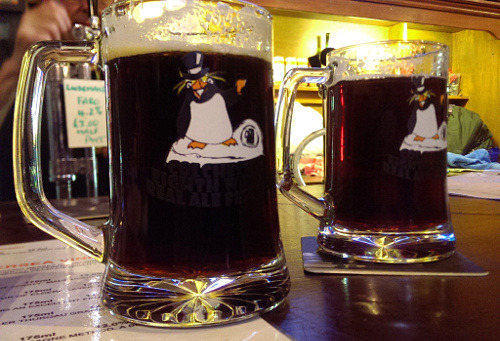
We arrived early enough that my own CAMRA-non-membership didn’t incur even the modest £3 entry fee. A small deposit secures you a commemorative festival glass to drink from all day, which you can either return later or take home with you. You buy a little card for £10 that you sort of wave at the volunteers manning the wall of casks and they daub it with potent-smelling marker pens and give you beer.

Which is, after all, what we’re here for. Beer was in plentiful supply: four walls lined with casks, serving space and cheerful volunteers. I would estimate there was a choice of over 150 different cask ales available during our visit. Small, local breweries were particularly well-represented, very few of which I’d even heard of, so this was all very exciting indeed.

A speciality Belgian bar made for a nice extra dimension, punctuating the expected overwhelming choice of Milds and Golden Ales with some hopelessly potent brews from the Low Countries.

I started with an IPA from Deverell’s so new that it wasn’t even on Untappd yet. Hoppy and delicious, it gave the tastebuds a pounding and left me wondering whether I’d be able to taste anything else that day. A rich, medicinal Winter Skiffle from Shortts Farm proved that I would.

A fruity 6.5% Abbey-influenced Sint Niklaas from Harwich followed, as did a perfectly-balanced Black Dragon Mild from B&T.

The Belgian Bar at Colchester Winter Ale Festival, 2015

This won’t make me popular in CAMRA circles, but the beery highlight of the day was from a keg: the thick, dark 8.2% Troubadour Obscura was the perfect antidote to the snow and rain chucking it down outside, though Ben rather trumped me by commandeering a steaming glass of Liefmans Glühkriek. Warm, spiced and subtly sour, it went straight to the head in a most pleasing fashion.

To cap it all, the organisation of the event by Colchester & North East Essex CAMRA was flawless. Despite hundreds of fellow festival-goers, we didn’t once wait a second to be served, thanks to great staffing by local volunteers.

We were also really pleased to note—stereotypes be damned—the significant proportion of females and otherwise beardless people both in the crowd and manning the bars. I didn’t spot a single sandal, and I was looking.

131. Rooster’s Yankee

It’s difficult to overstate the influence that Sean Franklin, founder of North Yorkshire-based Rooster’s, has had within the British brewing world over the years.

Sean is credited with pioneering the use of hops in creating the fundamental, distinct character of individual beers, rather than merely as a preservative which conveniently happened to contribute a bit of aroma and bitterness.

A former professional wine boffin, Sean famously described hops as “the grapes of brewing”. That’s absolutely true, and it’s a lesson that has enthusiastically been taken to heart by the new wave of British and American brewers (I’m doing my best to avoid using the word “craft”) for whom hops are the lifeblood.

Yankee may be Rooster’s most famous beer, but you really don’t see enough of it down south. Yet in a move that will delight fans of seriously fresh beer, Rooster’s have recently begun canning several of their brews, and the handsome little chaps have been cheerfully popping up in the fridges of discerning pubs and bars.

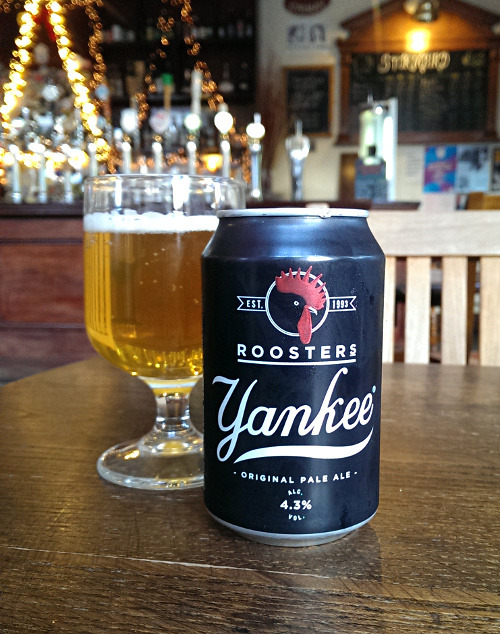
Rooster's Yankee at Stormbird, London SE5

Which—as if Threehundredbeers needed an excuse—brings us back to the ever-magnificent Stormbird in Camberwell, that Aladdin’s Cave of beery awesomeness where we enjoyed the classic Rochefort 10 a mere 50 or so beers ago.

Yankee is classified in The Book as a Best Bitter. Whether or not the recipe has developed over the years I couldn’t say, but it would unquestionably be seen as an American-style Pale Ale these days. Just look at the colour, for a start.

The aroma is floral and delicate, but full of citrus and tropical fruit: lychees, grapefruit, mango, that sort of thing.

There’s yet more grapefruit in the flavour, courtesy of the Cascade hops, and a pleasingly huge bitterness that’s well balanced by juicy sweetness from the malts.

It’s a classic, obviously, and a relatively light body makes Yankee hopelessly drinkable. It should probably come in a bigger can, quite frankly, but at Stormbird’s reasonable prices we can afford to take a couple more home with us.

Facts and Figures

Brewery: Rooster’s, Knaresborough, North Yorkshire, England
Style: Best Bitters
Strength: 4.3% ABV
Found at: Stormbird, Camberwell Church Street, London SE5
Serving: 330ml can

130. Exmoor Gold

It’s slightly worrying quite how soon it has started to become difficult to find new beers from the list. I narrowly missed out on Anker Gouden Carolus Classic at the Colchester Winter Ale Festival, I’ve worked my way through the menu at Lowlander, and even the once-reliable Grape & Grain has stopped tweeting tap updates and is becoming another bloody Wetherspoon’s.

Keeping an eye on social media has become priceless, and that’s exactly how I learned that the King’s Arms in Waterloo had put Exmoor Gold on the pumps.

I’d never visited the King’s Arms—it’s usually far too busy at the times I’m in the area—but I’d heard a lot of good things about it, so let’s pick up the Sunday papers and hop on the 68 to Waterloo.

Exmoor Gold at The King's Arms, Roupell Street

It’s a great pub, quite frankly, with a rare preserved two-room layout and an ever-changing range of cask ales. I started with a Dark Star Original, which I’ve only otherwise seen at Dark Star’s own pub, the Evening Star in Brighton, then got down to blogging business with a pint of Exmoor Gold.

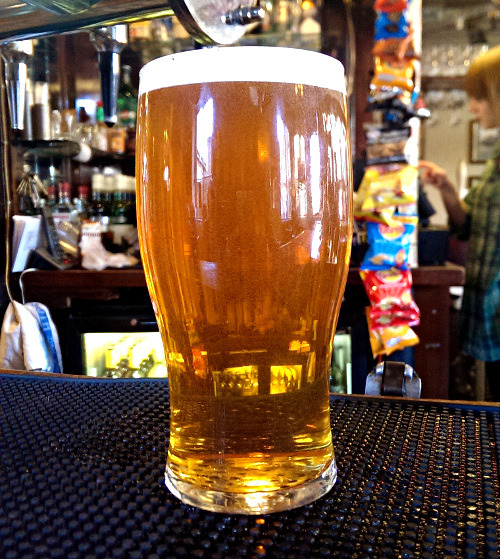
As the name suggests, it’s gold in colour with a small beige head that sticks to the glass. Exmoor Gold is unashamedly a fairly typical Golden Ale, and in fact is claimed to be the original example of the style. That said, it’s not a style that can usually be relied upon to excite your blogger, but it’s pleasant enough.

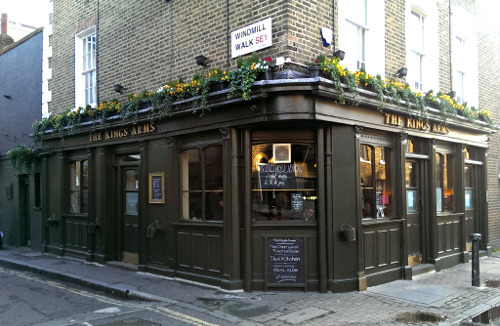
The King's Arms, Roupell Street, London SE1

I can’t say the Exmoor Gold challenged my expectations about this style. As with the Young’s London Gold, there’s just so little one can find to say about it. The only flavours I could really detect were a slightly cloying sweetness and a worrying acetic tang. It would be sessionable if you were planning to have a few pints, which Threehundredbeers is not.

The Book claims Exmoor Gold to be “intensely hoppy”, “intensely bitter” and “memorable” but it’s none of those things. Times and tastes have changed a great deal since those words were written.

Facts and Figures

Brewery: Exmoor, Taunton, Somerset, England
Style: Golden Ales
Strength: 4.5% ABV
Found at: The King’s Arms, Roupell Street, London SE1
Serving: Cask, pint